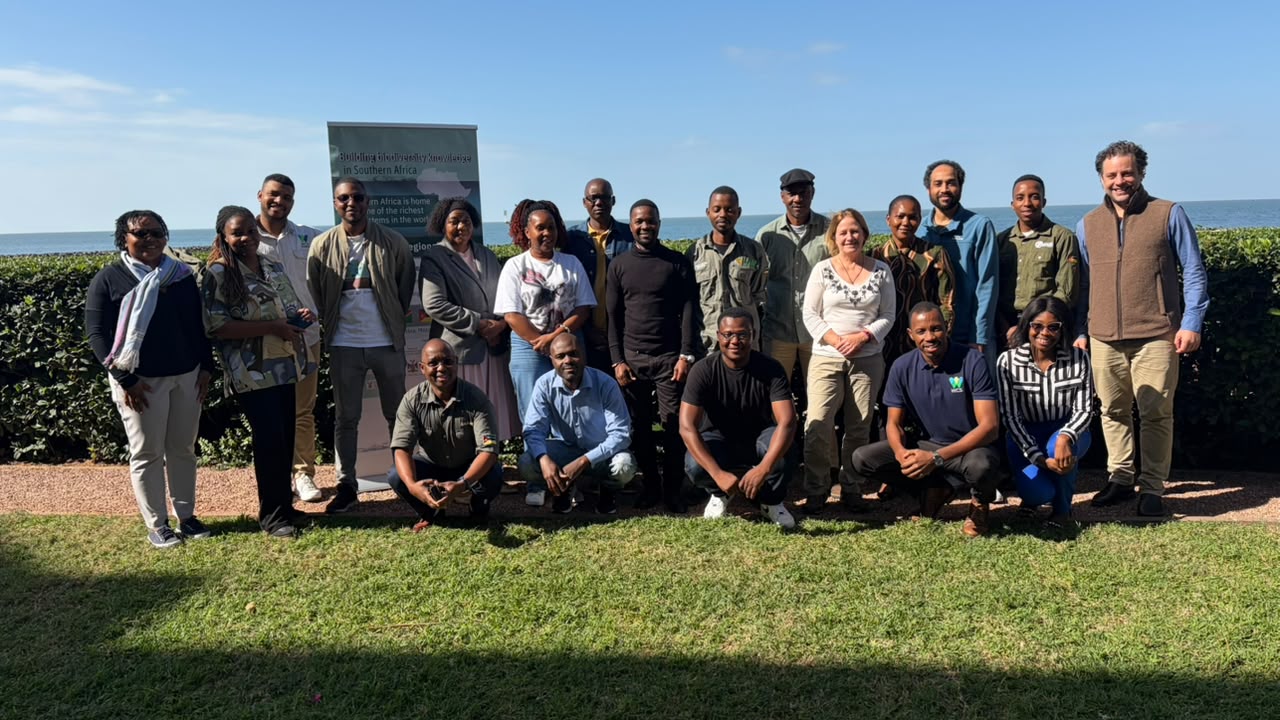
A workshop on the assessment and delineation of new proposals for Key Biodiversity Areas (KBAs) took place in Maputo from June 29 to July 03, 2026, as part of the regional SBAPP project aimed at “Building Biodiversity Knowledge for Action in Southern Africa”. The workshop brought together 21 national and international experts, including representatives from BirdLife South Africa, as well as specialists from government institutions, academia, research, and civil society organizations. This initiative was implemented by the Wildlife Conservation Society (WCS), in partnership with the Mozambique government through the Ministry of Agriculture, Environment, and Fisheries (MAAP). The project was funded by the Agence Française de Développement (AFD) and the Fonds Français pour l’Environnement Mondial (FFEM).
SBAPP has been supporting the Mozambique government in strengthening the technical and scientific knowledge of biodiversity since 2022 and contributing to processes such as spatial assessment, prioritisation and planning. Mozambique currently has 30 officially recognized KBAs resulting from a process led by the government in partnership with WCS and other relevant stakeholders. Those KBAs had been integrated into key national legal and strategic frameworks, including Decree No. 51/2021 and the National Maritime Spatial Planning Plan.
Recently, two main initiatives have significantly strengthened Mozambique's conservation knowledge base. First, new scientific data was gathered through fieldwork under the SBAPP project. Second, critical priority areas were identified through the Important Plant Areas (IPAs) initiative, a collaborative effort led by the Royal Botanic Gardens, Kew working in partnership with the National Agricultural Research Institute (IIAM) and Eduardo Mondlane University (UEM).
Throughout the week, participants conducted technical assessments and delineation of new KBA proposals, based on scientific data generated under the SBAPP and IPAs initiatives together with other complementary sources. The process also included, on the first day, a training component on the application of global criteria for identifying KBAs.
The results of the meeting are expected to contribute to updating the national KBA network, strengthening the scientific basis for spatial planning and for fulfilling Mozambique’s national and international conservation commitments.
Through this activity, the Government of Mozambique and its partners demonstrated their commitment to promoting biodiversity conservation through science, multi-sectoral participation, and informed decision-making to ensure sustainable development.