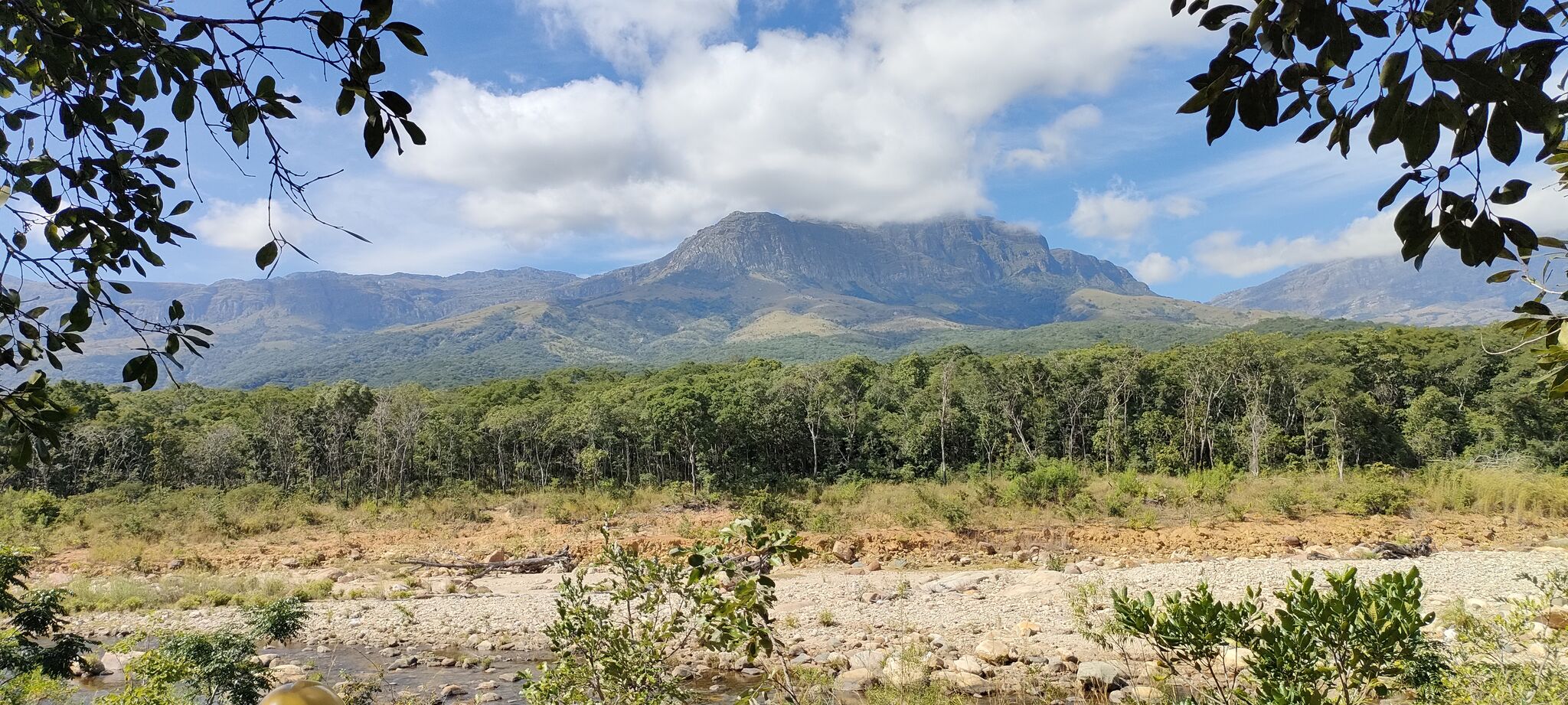
A newly published WCS study - led by WCS scientists in partnership with the government of Mozambique and several national institutions and specialists - assesses the status of Mozambique’s terrestrial ecosystems using the IUCN Red List of Ecosystems framework, finding that over half of the country’s ecosystems are threatened (53%). Strikingly, there are 7 Critically Endangered ecosystems which are entirely unprotected in the national protected area network. Overall, the greatest impacts are found in temperate subhumid grasslands and pyric tussock savannas, while other ecosystems are at risk due to restricted distributions and ongoing degradation.
These results were incorporated into national environmental policy and private-sector regulation and they will also be used to identify priority areas for conservation to meet the Kunming–Montreal Global Biodiversity Framework targets. These findings demonstrate how ecosystem Red Listing can support robust spatial planning and offer a practical model for GBF implementation and reporting in other countries.
The paper is the result of work carried out under the SPEED+ funded projects between 2019 and 2024. Led by Kendall Jones and coauthored by five additional WCS staff - Hugo Costa, Hermenegildo Matimele, Eleutério Duarte Gautam Surya and Vanessa Rathbone - alongside several partners, the publication represents a major milestone for ecosystem assessment in Mozambique.‑funded projects between 2019 and 2024. Led by Kendall Jones and co‑authored by three additional WCS staff - Hugo Costa, Hermenegildo Matimele, and Eleutério Duarte - alongside several partners, the publication represents a major milestone for ecosystem assessment in Mozambique.
Said Kendall Jones: “These data give us a comprehensive understanding of the extent and integrity of ecosystems in Mozambique, providing essential data for reporting on headline indicators of the GBF, and for identifying priorities for conservation and restoration to achieve GBF targets.
Hermenegildo Matimele noted: “This work was only possible thanks to the collaboration of many people and institutions, and to the remarkable technical contribution of spatial planner Mervyn Lotter, who led the development of the historical ecosystem map for Mozambique using machine‑learning techniques. The map identifies 162 ecosystems at a 1:1,000,000 scale, which is the most detailed ecosystem map ever produced for the country. Both the map and the RLE assessment are groundbreaking for Mozambique, and the methodology can serve as a model for other countries.”
Hugo added: “This RLE marks the culmination of a long and challenging journey, but the most significant achievement is that both the vegetation map and the RLE were officially endorsed by the Government of Mozambique in June 2024 and integrated into national policy and legislation. Embedding these tools in national regulations is essential for reconciling economic development with biodiversity conservation. With these instruments, both the Government and companies investing in Mozambique now have the means to make meaningful contributions to the naturepositive agenda.”‑positive agenda.”
Watch the ecosystem map and RLE video here (EN version) and here (PT version).