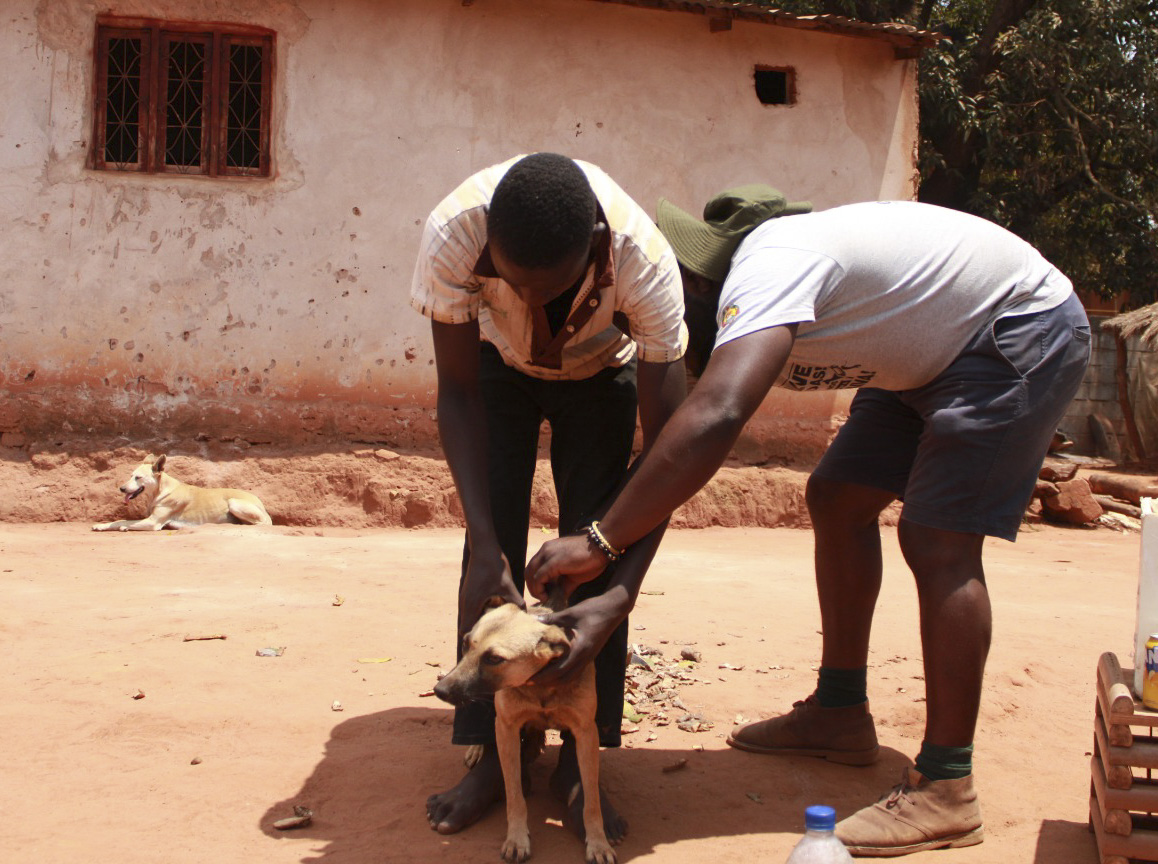
As part of World Rabies Day, observed on 28 September under the slogan “Stronger Together”, an awareness-raising and vaccination campaign for dogs and cats has been underway in the communities of the Niassa Special Reserve (NSR) since 17 September. The campaign, which runs until 2 October, is organised by the NSR and the Wildlife Conservation Society (WCS), in partnership with the Niassa Carnivore Project, Luwire, the Mozambique Wildlife Alliance (MWA) and the district governments of Mecula and Mavago, through the District Economic Activities Services.
The campaign aims to help prevent rabies and strengthen the protection of communities and animals living within the NSR landscape. It is estimated that around 250 dogs are spread across the Reserve’s communities, according to a count carried out by the Wildlife Guardians network through MOMS.
In addition to vaccination, the campaign includes activities to raise awareness amongst communities about rabies prevention and the importance of seeking immediate medical attention following potential exposure, particularly in cases of being bitten by a suspected carrier.
.jpeg?ver=kY6UUj5d_xejlNhSoq2cgw%3d%3d)
Rabies is a zoonotic disease that can be transmitted to humans through the bite of an infected animal. Although it can be prevented through the vaccination of dogs and an appropriate response following potential exposure, the disease continues to pose a threat to the health of both people and animals.
In the NSR, the campaign promotes a ‘One Health’ approach, recognising the link between the health of people, animals and the environment. The involvement of families is therefore essential to ensure that animals are vaccinated and to strengthen prevention measures within communities.
Through the joint mobilisation of communities, local authorities and partners, the campaign aims to strengthen rabies prevention across the Reserve’s landscape and reduce the risks associated with the disease, promoting an integrated response that benefits both people and animals.