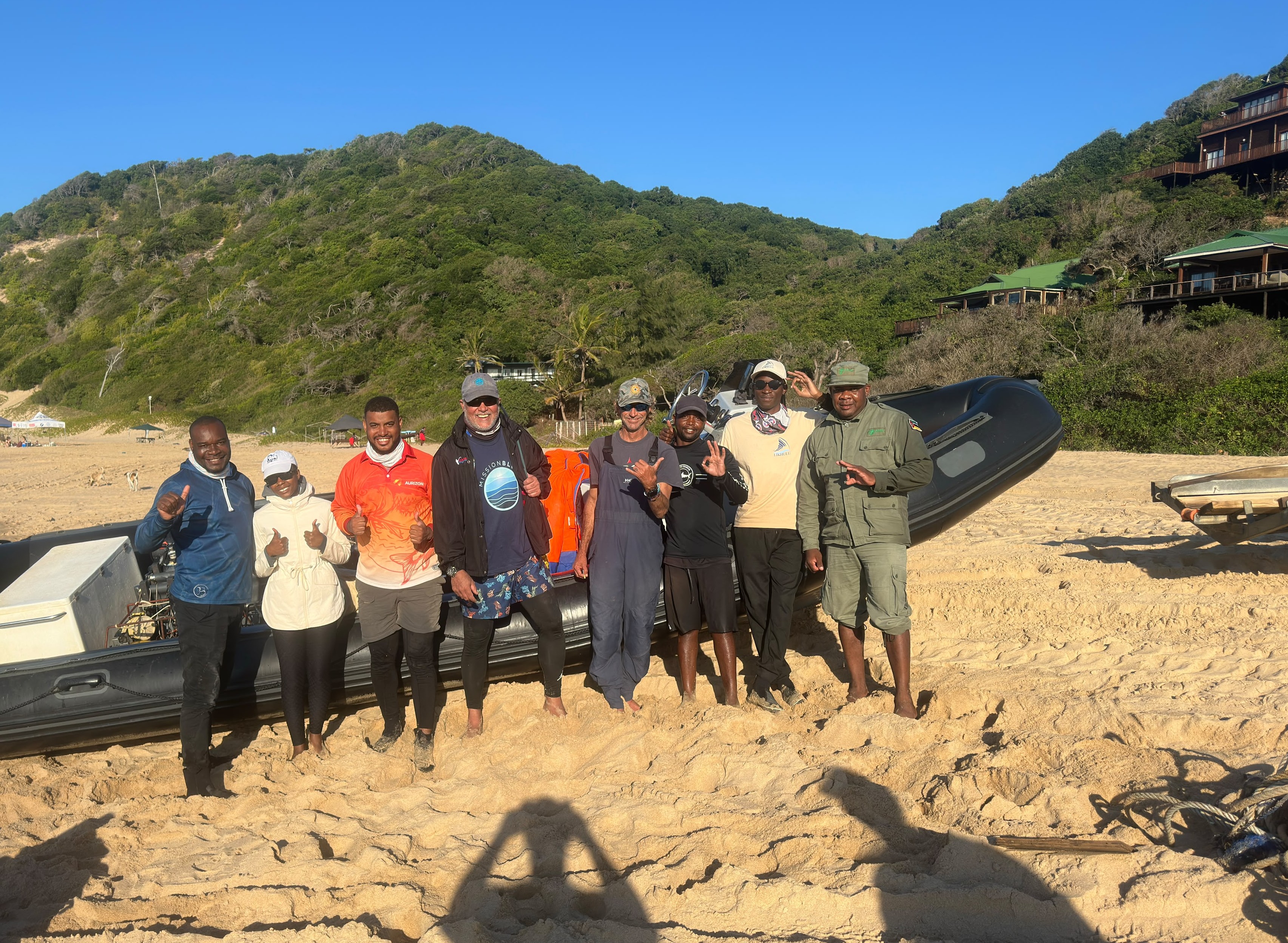
The Likhulu Foundation successfully completed the second monitoring campaign in the Techobanine No-Take Zone (NTZ), located within Maputo National Park, reinforcing the importance of this area for the conservation of sharks and rays in Mozambique.
Between 4 and 7 August, a joint team from the Likhulu Foundation (Marcos Pereira, Marcelo Levene, and Érica Zacarias) and Wildlife Conservation Society (WCS) Mozambique (Acácio Chechene and Jorge Sitoe) conducted 60 deployments using Baited Remote Underwater Video Systems (BRUVs), a non-invasive methodology widely used to assess marine biodiversity, as part of a project supported by Mission Blue.
During the survey, several species of conservation interest were recorded, including the tiger shark (Galeocerdo cuvier), wedgefish (Rhynchobatus spp.), and the bowmouth guitarfish (Rhina ancylostoma), the latter two being Critically Endangered ray species that are becoming increasingly rare to observe in their natural habitat.
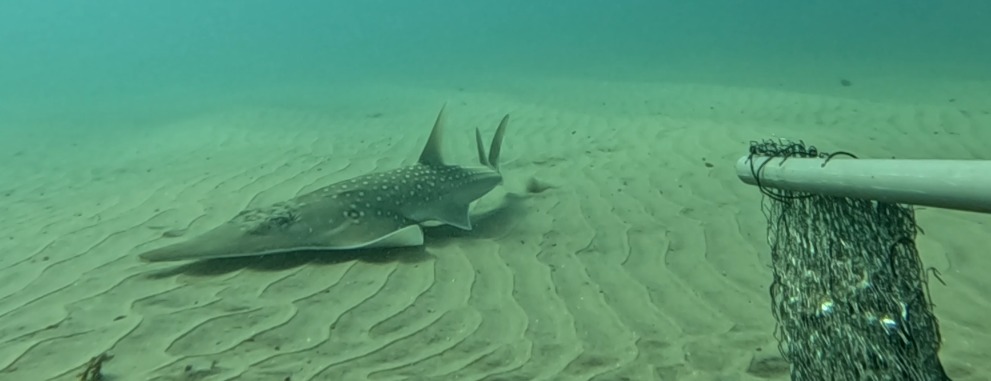
This second campaign complements data collected during previous surveys, enabling a more comprehensive understanding of the seasonal patterns of habitat use within the Techobanine NTZ by these vulnerable and threatened species.
The results strengthen the scientific evidence base needed to support the management and conservation of the Techobanine No-Take Zone, while also contributing to the development of national capacity for research and conservation of elasmobranchs (sharks and rays) in Mozambique.