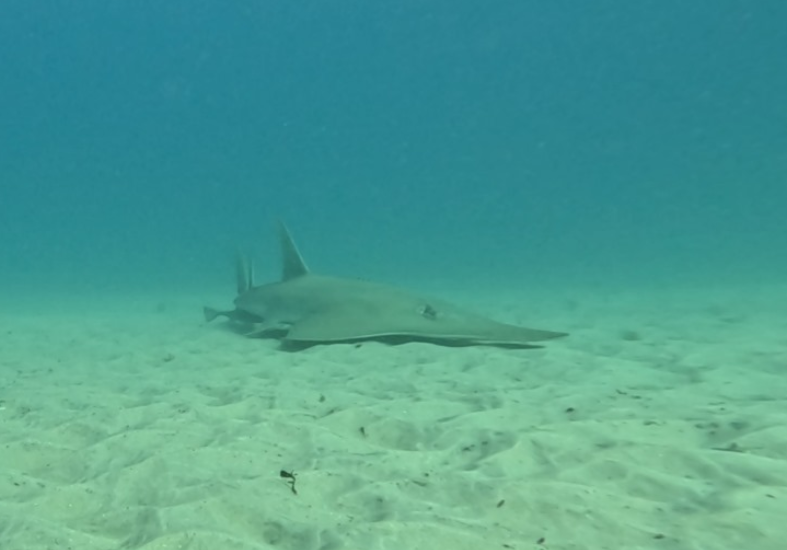
A new scientific assessment reveals that only 1.2% of Important Shark and Ray Areas in the Western Indian Ocean (WIO) are within areas of total protection from fishing.
This finding comes from research analyzing the network of Important Shark and Ray Areas (ISRAs), a scientific process coordinated by the International Union of Conservation of Nature (IUCN) Shark Specialist Group to identify critical habitats for these species. Between 2022 and 2023, 125 ISRAs were identified in the Western Indian Ocean, covering more than 2.8 million square kilometres, equivalent to about 10% of the region's surface waters.
These areas were defined based on multiple sources of information, including visual surveys, monitoring of fish markets, citizen science contributions, and additional scientific data. These ISRAs are home to 104 species of sharks, rays and chimaeras (39% of the total recorded in the WIO), with an impressive 76% classified as threatened with extinction by the IUCN Red List.
Despite their ecological importance, only 7.1% of ISRAs overlap with Marine Protected Areas and around 1.2% are located within no-take zones where fishing is prohibited. The most robust protections are concentrated in places such as the Seychelles, the Chagos Archipelago and parts of the Mozambique coast, while most of these areas remain exposed to human pressure.
Mozambique stands out as an important country in the regional ISRA network, with seven areas identified along its coastline after decades of research and monitoring. Some of these zones overlap with important marine conservation areas, including the Bazaruto Archipelago National Park, Maputo National Park and the Northern Quirimbas Environmental Protection Area.
According to experts such as Stela Fernando from Oceanographic Institute of Mozambique (InOM), Rhett Bennett from Wildlife Conservation Society (WCS) and Jesse Cochran IUCN Shark Specialist Group, the Mozambican coast is essential for the reproduction and nurseries of sharks and rays, but pressure from fishing and other human activities requires effective management measures that reconcile conservation and the livelihoods of coastal communities.
For organizations such as the WCS, the study highlights both a challenge and an opportunity to protect critical habitats for sharks and rays, while supporting the livelihoods of coastal communities that depend on fishing. The ISRA network provides scientific guidance for governments and partners to expand marine conservation, strengthen ecological monitoring, and meet international biodiversity commitments. Even with limited protection, these areas provide a clear basis for guiding management decisions and ensuring that sharks and rays continue to play their role in marine ecosystems.